


Virtual Reality Endovascular Simulator


ANGIO Mentor®
Endovascular Surgical Training Simulator
________________________________________
The ANGIO Mentor provides fully simulated, hands-

The carotid intervention module provides practice of all aspects of the carotid stenting procedure. These include stenting and balloon procedures with a embolic protecting device, ACT level, vital signs, and neurological status monitoring.
The module comprises a variety of virtual patients, each with different arch types, different locations of strictures, and in varying degrees of stenosis.
Changes in vital signs can be monitored during the balloon angioplasty or stenting procedures. The baroreceptor response can be blocked using atropine or other appropriate medication.

build your own training curriculum
I
performance feedback
I
teaching aids
I
excellent customer
support
I

based on real patient data
I
C-
import real cases and
practice before procedures
full procedures
I

ANGIO Mentor couples these virtually real procedures with educational aids, training
material, additional viewpoints, and comprehensive performance feedback to create
a complete training package for use in groups with an instructor, individually for
self-
An exciting new addition to ANGIO Mentor is that it is the first of the Simbionix simulator range to be PROcedure Ready. This groundbreaking technology allows surgeons to quickly and easily input real patient CT / MR data and investigate and practice on their own patient before the real procedure.


ANGIO Mentor is PROcedure Ready...
click here to discover more about PROcedure...
Endovascular Simulator

ANGIO Mentor’s ever-


VIDEO
I


VIDEO
I


VIDEO
I
carotid angioplasty with embolic protecting device
diagnostic angiography
carotid sheath placement in
type 3 arch

The renal intervention module on ANGIO Mentor incorporates the use of either retrograde brachial or femoral arterial access aproaches. Interventional radiologists and cardiologists can practice on renal angioplasty procedures for the diagnosis and treatment of renal artery stenosis.
The module comprises a variety of virtual renal artery stenosis cases, each with different lesion types and locations and different orientation of the renal arteries and arterial system.
Physical simulation of the intra-
VIDEO
I
diagnostic arteriogram
VIDEO
I
VIDEO
I
renal artery stenting -
femoral approach
renal artery stenting -
brachial approach


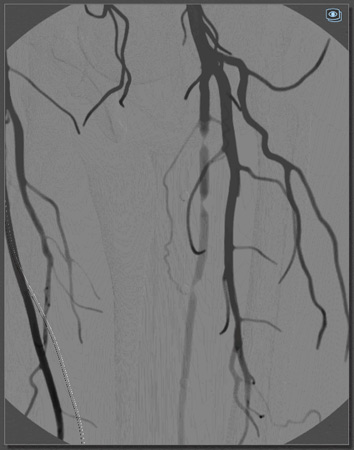
The SFA and iliac modules are completely unique to ANGIO Mentor. They are made up
of a variety of virtual cases based on genuine 3D anatomies created from CT/MRI images
of real patients. Anatomical variations include different aortic bifurcation types;
different iliac artery length and orientation and different locations of lesions
(internal or external iliac, and proximal-

Post-
Bilateral iliac lesions -
Left diffuse SFA lesion -



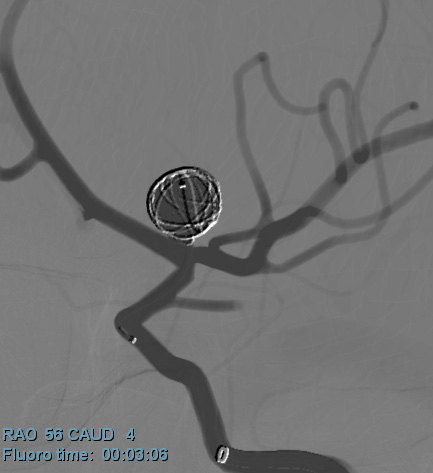
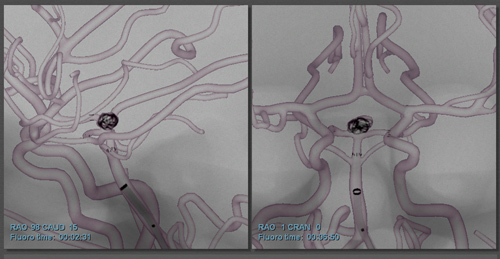
ANGIO Mentor’s cerebral module gives clinicians an opportunity to practice performing
intracranial aneurysm coil embolization and intracranial stenosis stenting with complete
virtual-
The module includes stent / balloon assisted coil embolization and treatment of stenosis
and additionally features a unique simulated biplane x-
L-
Basilar tip aneurysm
Bi-
Perforation
Stent assisted coil embolization




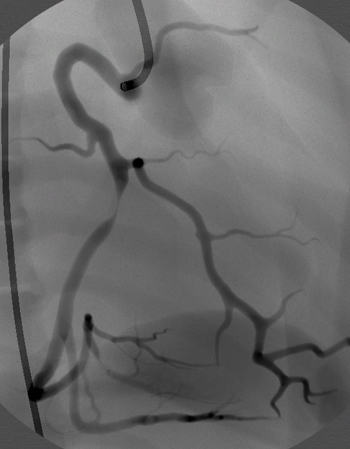
The coronary module on ANGIO Mentor provides full practice in a range of coronary
angiography procedures as well as in coping with intra-
ANGIO Mentor is unique in featuring the simulation of a virtual patient’s vital signs
in response to coronary complications, giving trainees all the information they would
have in a real procedure and allowing them to make crucial, real-
Trainees can choose from a variety of interventional devices and tools for treatment
of complications, such as PTFE stent (perforations), micro-
This first of its kind module enables:
•Coronary angiography
•Coronary balloon angioplasty
•Coronary stenting
•Simulation of coronary complications
•Extensive drug panel
•ECG and vital signs reactions

Right coronary lesions
Tortuous anatomy
1st diagonal perforation
Left dominant anatomy




VIDEO
I
VIDEO
I


Coronary stenting
Coronary angioplasty and stenting

This module on ANGIO Mentor is created to help in the training of electrophysiology
interventions. It provides practice opportunities in the placement of three electrode
leads -
The fully-
The CRM module’s virtual patients provide a variety of realistic anatomies including variations in the CS ostium (e.g. Thebesian valve) and coronary sinus vasculature.
Coronary sinus angiography
RV lead replacement
Sensing and pacing measurements
Thebesian valve:
a CS ostium variation


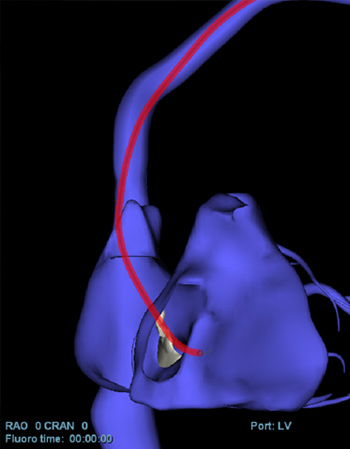

ANGIO Mentor’s aortic valve replacement module enables trainees to practice complete endovascular implantation of an aortic valve bioprothesis. The comprehensive module includes a variety of patient anatomies with varying aortic valve annulus sizes, degrees of calcification, left ventricular hypertrophy, and heart orientations. Trainees can practice accurate positioning and deployment of the bioprosthesis under these different physiological circumstances.
During the fully simulated virtual-
The performance feedback metrics presented at the end of the procedure additionally
show how the actual bioprosthesis is deployed relative to the desired positioning
as well many other useful parameters for judging self-
Valvuloplasty
Beginning deployment
2 thirds development
Frame fully deployed
Pressure gradient


ANGIO Mentor’s new AAA repair module allows the practice of endovascular abdominal aortic aneurysm repair using a stent graft system which includes:
•aortography
•precise deployment of the main body and contralateral leg stent grafts
•deployment of extenders and touch-
As in real procedures, trainees may encounter complications such as stent graft migration or endoleaks.
As with other modules on the simulator, a library of virtual patients offers practice on varied anatomies including different aortic neck sizes and angulations, varying aneurysm sizes and orientations, and a variety of iliac arteries with individual tortuosity, plus the optional presence of thrombus or calcification.

This new module provides practice on multiple patient anatomies and scenarios requiring
embolization. This includes:
•renal aneurysm
•arterio venous fistula
•arterio venous malformation
•GI bleeding
•uterine artery fibroids
•trauma and pre/post AAA stent grafting endoleak
The module provides a selection of common embolization materials such as micro-


This module, which is in the final stages of development, is the latest addition to ANGIO Mentor broad range of modules. It provides practice on left arterial access via the interatrial septum and arterial fibrillation arrhythmia treatment by pulmonary vein ablation. The practical aspects of this important technique include identifying the optimal transseptal puncture site, correct and safe transseptal puncture technique and pulmonary vein isolation by using various ablation catheters at the pulmonary veins’ ostia.
During the simulation, life-

Throughout a host of fully simulated procedure modules, ANGIO Mentor provides basic practice, procedure rehearsal, skill assessment, individual performance feedback and “best practice” techniques. These are some of ANGIO Mentor’s key features and benefits.
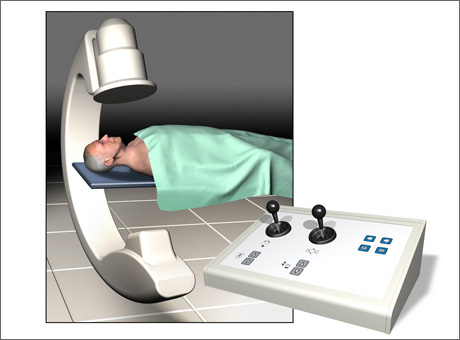
ANGIO Mentor provides realistic practice of technical skills including use of a c-
complication management
Vital signs including simulation of heart rate, invasive and non-
A full assortment of drugs are available for administration during the simulated
procedures. The effects on the virtual patients are accurately reflected in the angiographic
images and the patient’s vital signs. including simulation of heart rate, invasive
and non-


ANGIO Mentor’s most exciting new feature is its compatibility with the Simbionix
PROcedure Rehearsal Studio software. This allows you to input your own patient’s
data, and within a few minutes you can be practicing a procedure on the exact anatomy
you’ll be performing it on for real. Read all about this ground-
Image archive
management
Hemodynamic monitoring


Cath lab simulation
Drug selection



ANGIO Mentor, like all Simbionix simulators, offers comprehensive performance feedback on all procedures allowing trainees to judge their own performance as well as for instructors to judge and assess trainees. The extensive statistics generated also have the scope to be used for studies and for future certification.
An additional feature of ANGIO Mentor (and again all Simbionix virtual reality medical simulators) is the management mode. This is designed to give instructors and administrators a tool for managing trainees.
The system enables instructors to add trainees, assign them to training groups, assess their skill levels, view their ongoing learning curve, and assign individuals with particular training curriculums built out of the ANGIO Mentor modules.


ANGIO Mentor
virtual reality endovascular simulator
where to next?
Over 10 modules
I
hemodynamic monitoring
I